

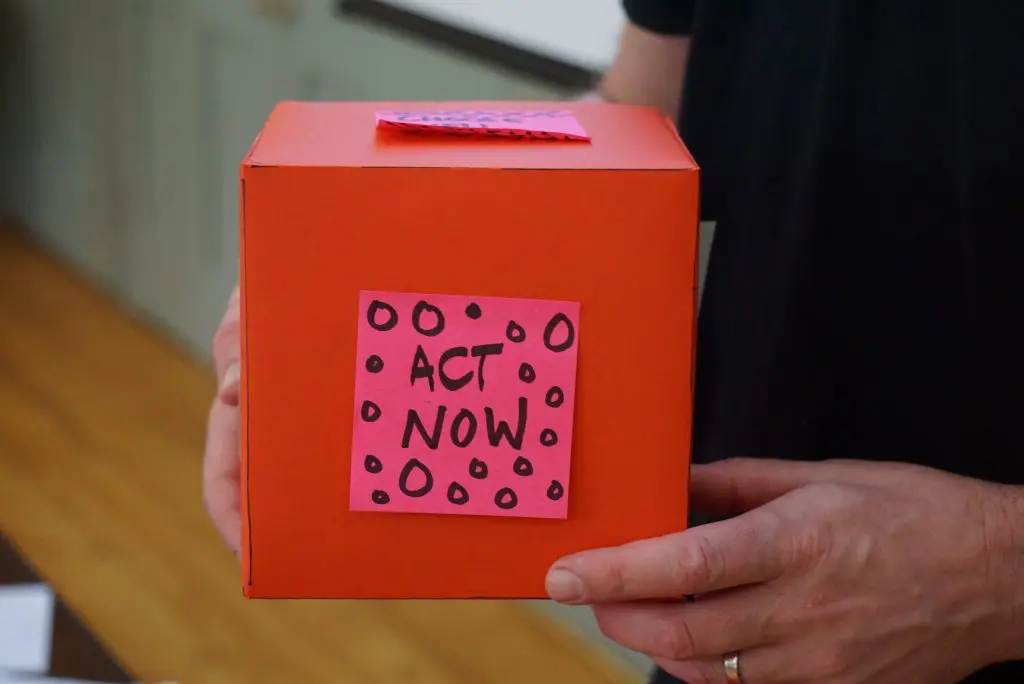
If you work in the design world, you've probably heard the term MVP. But what does it actually mean? MVP stands for Minimum Viable Product. It's a concept or sketch that you can make and test quickly, with minimal resources. The goal of an MVP is to find out whether an idea is feasible and whether it has the potential to succeed. An MVP can take different forms, like a paper prototype, a wireframe of a website or a physical model of a product. What matters most is that it's a workable product you can test quickly.
Why is an MVP important in the design world?
In the design world, it's crucial that a product makes sense to the user. That's why testing ideas with the target group or end user is essential. An MVP lets you quickly test whether an idea is feasible and whether users understand it. Based on that feedback, the product can be developed further.
Another big benefit of an MVP is that it saves money and time. By quickly testing whether an idea is feasible, you avoid spending lots of time and money on a product that won't land with customers in the end.
MVPs aren't only important in the design world, but also in the world of startups. Startups often have limited resources and need to respond quickly to changes in the market. By making an MVP, startups can quickly test whether their ideas are feasible and get feedback from their potential customers. This can help them develop and improve their product further.
When do you use an MVP?
You can use an MVP when you have an idea for a new product or service and want to see if it resonates with your target group. You can also use it to test whether new features or improvements land with the customer.
It's important to remember that an MVP is not the same as a prototype or a final product. It's an in-between form, meant to quickly test whether an idea is feasible and to get feedback from the customer.
How do you make an MVP?
Making an MVP starts with defining the product's core functionality. What is the product's basic function, and what does it need to be able to do? After that, you can think about what other functionality matters to the user.
Based on this information, you can build an MVP. This could be a simple sketch on paper, a wireframe of a website or an app, or a physical prototype of the product. What matters most is that you can make a workable product with minimal resources to test.
Benefits of an MVP
The biggest benefit of an MVP is that you can quickly test whether your idea is feasible, without investing lots of time and money in building a full product. Another benefit is that an MVP gets you feedback from your customers fast. That can help you develop and improve the product further. It can also help you work out which features and characteristics of the product matter most to your customers.
An MVP can also help you reduce risk. If you have an idea for a new product, it can be hard to tell whether it's actually feasible. By making and testing an MVP, you can quickly find out whether the idea is viable and whether there's demand for the product.
How do you make a successful MVP?
A successful MVP takes careful planning and execution. It all starts with a good understanding of the target audience and their needs. You need to know what users want and what problems they have.
Next, you need to develop an MVP that addresses these needs and problems. The MVP should be easy to use and include the core functionality of the product. That means you shouldn't try to cram every feature into the MVP. Focus on the most important features and characteristics.
Another important part of a successful MVP is testing the product. Make sure you test the product with your target group and collect their feedback. Analyse the feedback and use it to develop and improve the product further.
What are the pitfalls of an MVP?
Although an MVP has many benefits, there are also a few pitfalls to watch out for. One of the biggest is trying to cram too many features into the MVP. This can confuse the user and make the MVP ineffective.
Another pitfall is not meeting the customer's expectations. When a customer sees an MVP, they usually expect the product to be unfinished. But they do expect the MVP to include the core functionality of the product. If the MVP doesn't meet those expectations, the customer may end up disappointed.
Conclusion
An MVP is an important tool in the design world and in the start-up world because it lets you test quickly and cost-effectively whether an idea is feasible and whether users understand it. By testing smartly and iterating on the product, you can end up building a product that goes down well with your customers, and that saves you plenty of time and money.
So, if you have an idea for a new product or service, definitely consider making and testing an MVP. It can help you quickly get a sense of how feasible your idea is, and quickly learn what your customers want and need. Who knows, you might just develop the next big product that changes the world!
